
-
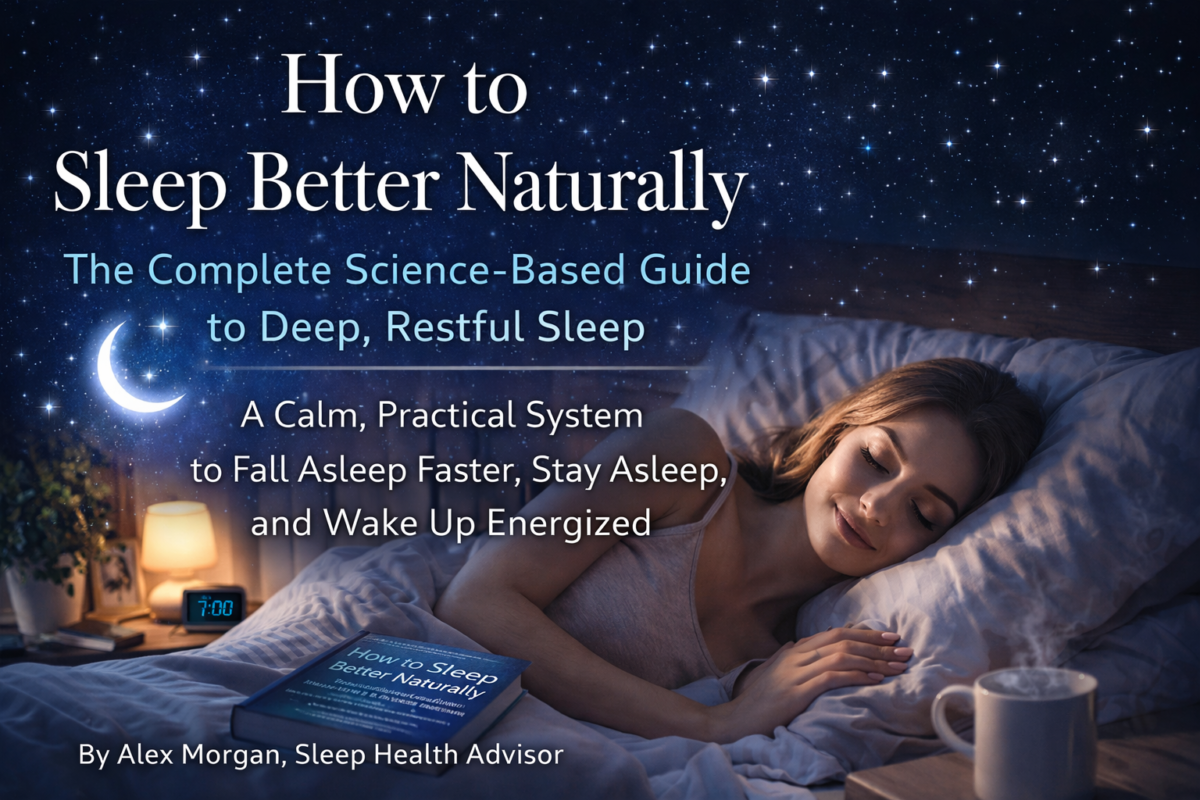
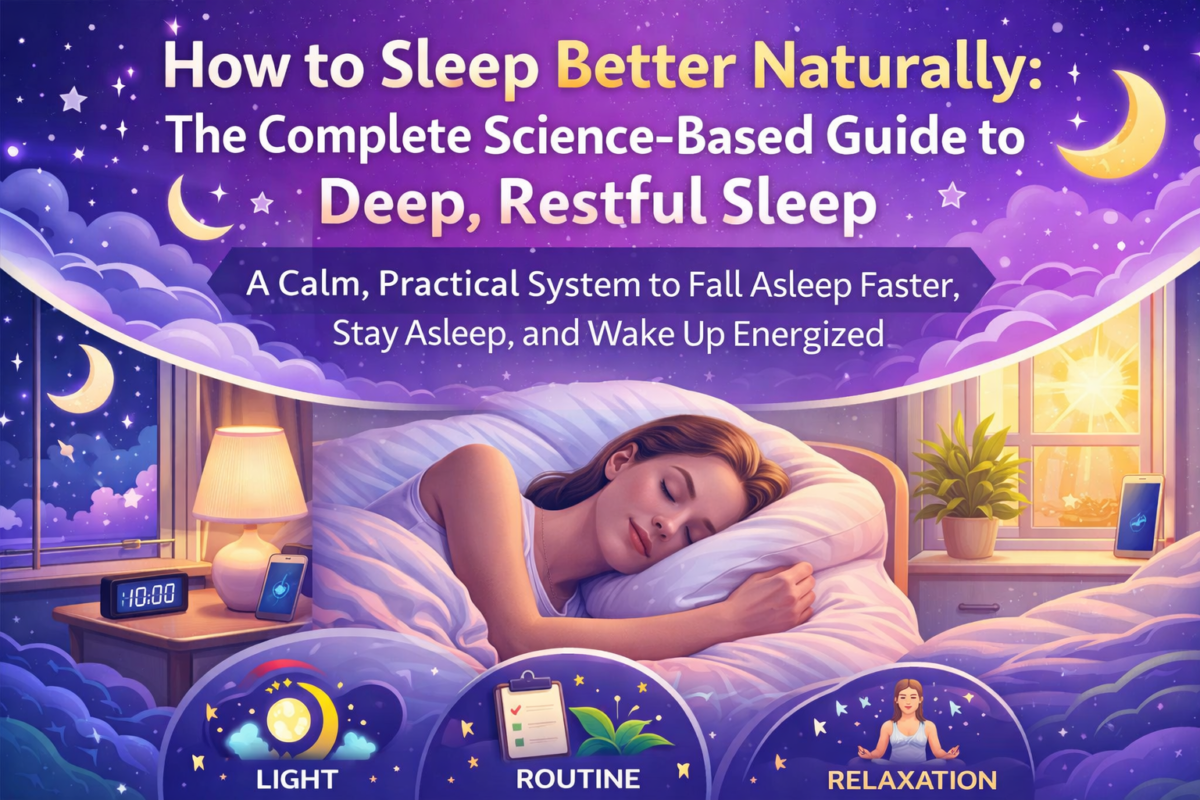
😴 How to Sleep Better Naturally: The Complete Science-Based Guide to Deep, Restful Sleep
A Calm, Practical System to Fall Asleep Faster, Stay Asleep, and Wake Up Energized
By Alex Morgan, Sleep Health Advisor
🌙 A Calm Beginning
Sleep is not something you need to chase.
It’s a natural process your body already knows how to do.
When sleep feels difficult, it usually means one thing:
your system is slightly out of balance.
This guide will help you restore that balance, step by step,
using science-based methods that work with your body, not against it.
🧠 Understanding Sleep: The Foundation
Your sleep is controlled by three systems working together:
1. Sleep Pressure
The longer you stay awake, the more your body builds a natural need for sleep.
2. Circadian Rhythm
Your internal clock, controlled mainly by light and darkness.
3. Arousal Level
How alert or relaxed your nervous system is.
👉 The key insight:
You don’t need to force sleep —
you need to reduce interference with these systems.
🔍 Identify Your Sleep Pattern
Understanding your pattern is essential.
-
If you struggle to fall asleep → your mind/body is too alert
-
If you wake up during the night → your sleep is fragmented
-
If you wake up too early → your rhythm may be shifted
-
If you feel tired after sleeping → your sleep quality needs support
Each pattern has a different solution.
☀️ The Most Important Habit: Fixed Wake-Up Time
Wake up at the same time every day.
Even after a poor night.
This single habit:
-
stabilizes your circadian rhythm
-
improves sleep consistency
-
makes falling asleep easier over time
🌅 Morning Light: Reset Your Internal Clock
Within the first hour of waking:
-
get natural sunlight or bright light exposure
This signals your brain:
“This is the start of the day.”
👉 This alone can improve sleep dramatically.
☕ Caffeine: Use It Intelligently
Caffeine blocks sleep pressure.
-
Best used in the morning
-
Avoid 6–8 hours before bed
🏃 Movement and Sleep Depth
Daily movement improves:
-
deep sleep
-
recovery
-
sleep stability
Even light activity helps.
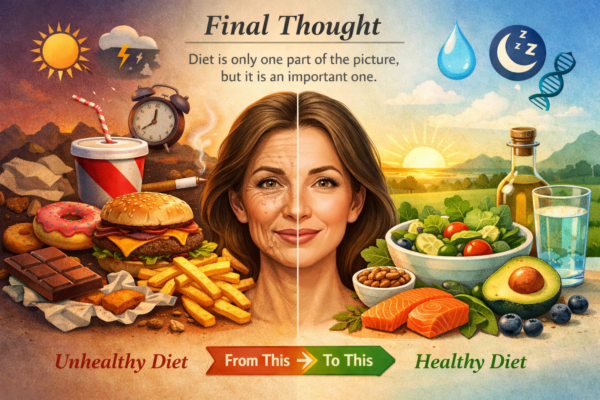
🍽️ Food & Eating Timing (Evening Nutrition and Sleep)
What you eat — and when — has a direct effect on your sleep.
General guidelines:
-
finish your last meal 2–3 hours before bed
-
avoid heavy, fatty, or large meals late at night
-
keep evening food light and easy to digest
👉 Your body sleeps better when it’s not busy digesting.
Light evening options:
-
yogurt
-
banana
-
light sandwich
-
herbal tea
👉 The goal is to feel comfortable — not full or hungry.
🏋️ Exercise Timing and Sleep
Exercise improves sleep — but timing matters.
Best timing:
-
morning or afternoon
-
early evening (for most people)
Avoid:
-
intense workouts 1–2 hours before bed
👉 Intense exercise raises alertness and can delay sleep.
Better late-night options:
-
stretching
-
light yoga
-
slow walking
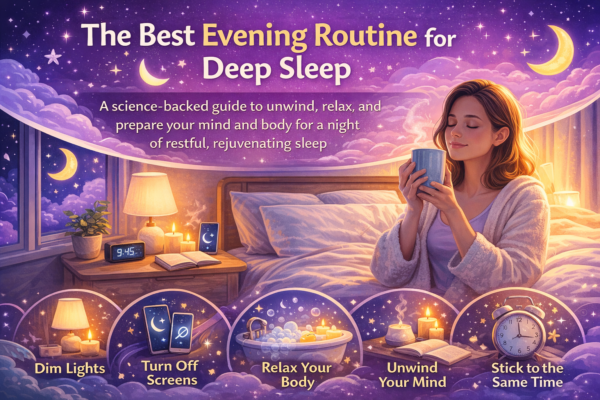
🌙 Evening Routine: The Transition to Sleep
Sleep starts before you go to bed.
60–90 minutes before sleep:
-
dim the lights
-
reduce stimulation
-
shift to calm activities
This allows your brain to transition naturally.
🧘 Calm the Mind (The Key to Falling Asleep)
If your mind is active, sleep will not come easily.
Mental Download
Write everything on your mind before bed.
Breathing Pattern
Inhale 4 seconds
Exhale 6–8 seconds
👉 Longer exhales calm the nervous system.
🌿 Natural Sleep Support (Optional)
These support relaxation but are not required:
-
Chamomile → gentle calming
-
Lemon balm → reduces mental tension
-
Passionflower → helps with racing thoughts
-
Lavender → calming sensory signal
-
Valerian root → stronger support when needed
🛏️ Optimize Your Sleep Environment
Your room should support sleep automatically:
-
cool temperature (18–22°C / 64–72°F)
-
low or no light
-
quiet or consistent background sound
🔄 What To Do If You Can’t Fall Asleep
If you are awake and frustrated:
Don’t stay in bed trying to force sleep.
Instead:
-
get up calmly
-
do something quiet in low light
-
return when sleepy
👉 This trains your brain to associate bed with sleep — not stress.
🧠 The Mental Side of Sleep
Thoughts can either help or block sleep.
Replace:
“I need to fall asleep now”
With:
“My body will sleep when it’s ready”
👉 Reducing pressure improves sleep.
📅 7-Day Sleep Reset Plan
Every Morning:
-
wake up at the same time
-
get light exposure
During the Day:
-
move your body
-
limit caffeine
Evening:
-
dim lights
-
reduce stimulation
Night:
-
follow a calm routine
-
allow sleep to happen naturally
❓ Frequently Asked Questions
How long should it take to fall asleep?
10–20 minutes is normal.
Is waking up at night normal?
Yes — staying calm helps you fall back asleep.
Why do I feel tired after sleeping?
Sleep quality or consistency may need improvement.
What is the most important habit?
A consistent wake-up time.

🌙 If Nothing Else Seems to Work
Sometimes, even when you do everything “right,”
your mind can still stay active at night.
And that’s okay.
In those moments, the goal is not to force sleep —
but to gently shift your focus.
Some people find that having soft background content can help quiet the mind.
A familiar voice or low-engagement content can:
-
reduce overthinking
-
create a sense of ease
-
make it easier to drift back into sleep
A simple approach:
-
keep the volume low
-
lower screen brightness to the minimum
-
use night mode / warm light filter
-
choose calm, predictable content
👉 If possible, audio is better than video —
but even with a screen, keeping it dim and non-stimulating can help.
👉 The intention is not stimulation —
but gentle mental settling.
If this helps you relax and fall asleep more easily,
it can be a useful tool when needed.
✍️ Author
Alex Morgan
Sleep Health Advisor
(Research-Based Sleep Specialist)






Aug