


Is the Sugar in Fruit Bad for You? A Doctor Explains the Science
We hear it all the time: sugar is the enemy. It drives inflammation, accelerates aging, and is linked to a host of chronic diseases. Yet, in the same breath, health experts tell us to eat more fresh fruit.
Since fruits are naturally packed with sweet, simple carbohydrates, isn’t this a massive contradiction? How can sugar be toxic, but the sugar in fruit be healthy?
In nature, there are no real contradictions—only incomplete understandings. When we look at the biology of how our bodies process fruit compared to processed sugar, the differences are night and day.
Here is the science behind why you shouldn’t fear the sugar in fruit, and why keeping it in your diet is one of the best things you can do for your body and mind.
The Bottom Line: Fruit Extends Your Life
Before diving into the biology of blood sugar, let’s look at the hard data.
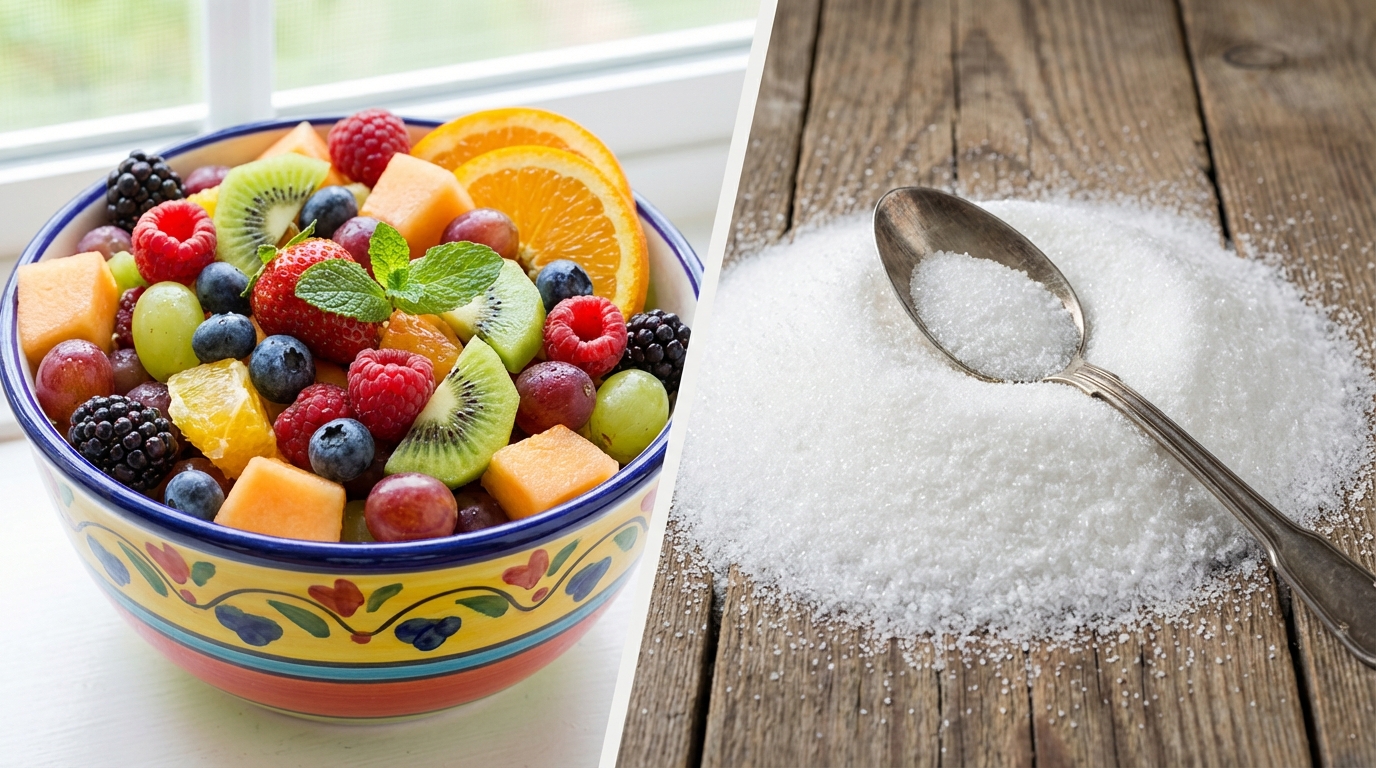
Extensive research shows that eating fruit has a profoundly positive impact on our health. A massive meta-analysis (a comprehensive review of multiple studies) revealed that eating 100 to 500 grams of fruit per day significantly lowers your risk of developing diabetes, heart disease, and various other chronic conditions.
More importantly, it improves a metric doctors call all-cause mortality—meaning your overall risk of dying from any cause drops when you eat fruit regularly.
The benefits aren’t just physical. A diet rich in fruit is also strongly linked to a lower risk of depression.
What about processed sugar? The picture is the exact opposite. High consumption of added sugar is linked to:
- Increased risk of death from all causes (especially heart disease)
- Higher rates of dementia and Alzheimer’s disease
- Increased risk of depression and anxiety
So, how do two things that both contain “sugar” yield such radically different results? It comes down to speed and packaging.
The Blood Sugar Rollercoaster vs. The Gentle Wave
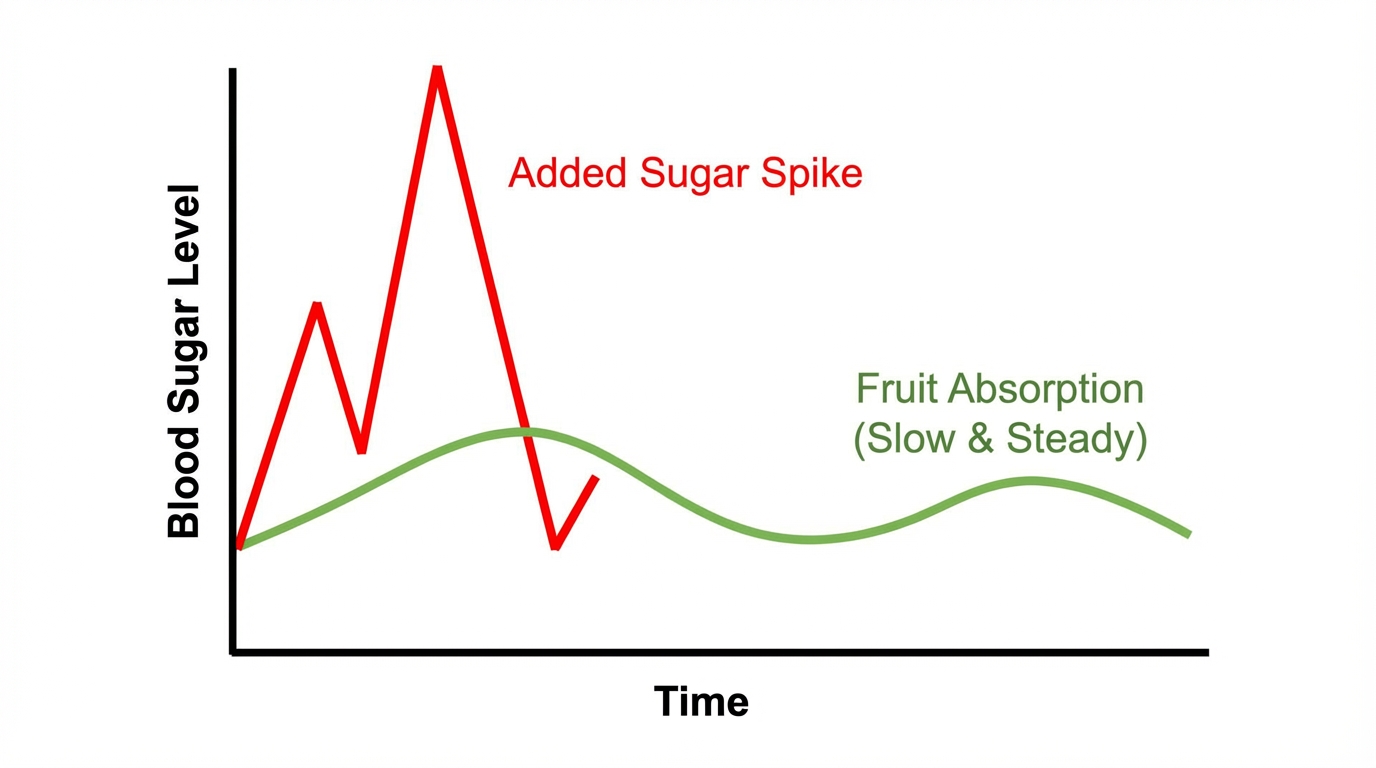
Imagine eating a spoonful of refined table sugar. That sugar dissolves immediately and rushes into your bloodstream at lightning speed.
This creates a sharp spike in your blood glucose. To deal with this rush, your pancreas pumps out a massive wave of insulin.
Insulin isn’t just the key that unlocks your cells to let glucose in; it’s a master hormone that dictates how your body manages energy. Frequent, massive insulin spikes are the primary drivers of insulin resistance. Over time, this leads to Type 2 diabetes and Metabolic Syndrome—the springboard for nearly every chronic disease on the planet.
When you eat a whole fruit, the metabolic message is completely different.
Fruit isn’t just a bag of sugar water. The natural sugars are locked inside a complex matrix of cellular walls, water, and fiber. Because your digestive system has to break down this fibrous structure, the sugar is released slowly into your bloodstream.
Instead of a sharp, dangerous spike, you get a gentle, low wave of blood sugar. This results in a much smaller insulin release, keeping your metabolism stable and healthy. In biology, the dose makes the poison, but speed is also a dose. The slow rate of sugar absorption from fruit is what keeps you safe.
The Hidden Powers of Whole Fruit
Beyond just slowing down sugar absorption, the “packaging” of fruit contains essential compounds your body desperately needs to thrive.
1. Fuel for Your Microbiome
Fruit is rich in plant fiber. While your body can’t digest this fiber, the trillions of bacteria in your gut (your microbiome) feast on it. When your gut bacteria ferment plant fiber, they create entirely new, highly beneficial compounds that regulate your immune system and protect your gut lining. A massive study published in The Lancet, tracking 135 million person-years of data, definitively proved that dietary fiber protects against death from all causes.
2. Powerful Antioxidants and Nutrients
We often judge food only through the lens of sugar or calories, but fruit is full of biological modifiers. For example:
- Vitamin C: Helps balance sugar metabolism and reduces oxidative stress.
- Urolithin A: A compound your microbiome produces when you eat pomegranates, which rejuvenates your mitochondria (the powerhouses of your cells).
3. Slashing Chronic Inflammation
Perhaps the greatest benefit of all is that eating whole fruit reduces chronic inflammation. Chronic, low-grade inflammation is considered one of the primary “Hallmarks of Aging.” Anything you can do to lower this inflammation promotes a longer, healthier life.

When Should You Avoid Fruit?
While fruit is a crucial part of a healthy human diet—one we’ve adapted to over millions of years—there are rare exceptions.
If you are strictly following a Ketogenic (Keto) diet for specific medical or weight-loss reasons, you will need to avoid most fruits, as even the slow-releasing carbs will pull your body out of the state of ketosis.
A Tip for the Best Results: Eat Seasonally
If you want to get the maximum benefit from your fruit, try to eat what is in season. Seasonal fruit is fresher, retains more of its vital nutrients, and hasn’t been sitting in cold storage for months.
Ultimately, don’t let the fear of sugar scare you away from the produce aisle. When consumed as nature intended—whole, fibrous, and fresh—fruit isn’t a guilty pleasure. It is powerful medicine.