
How to Stay Young: What Actually Works (Backed by Science & Real Results)
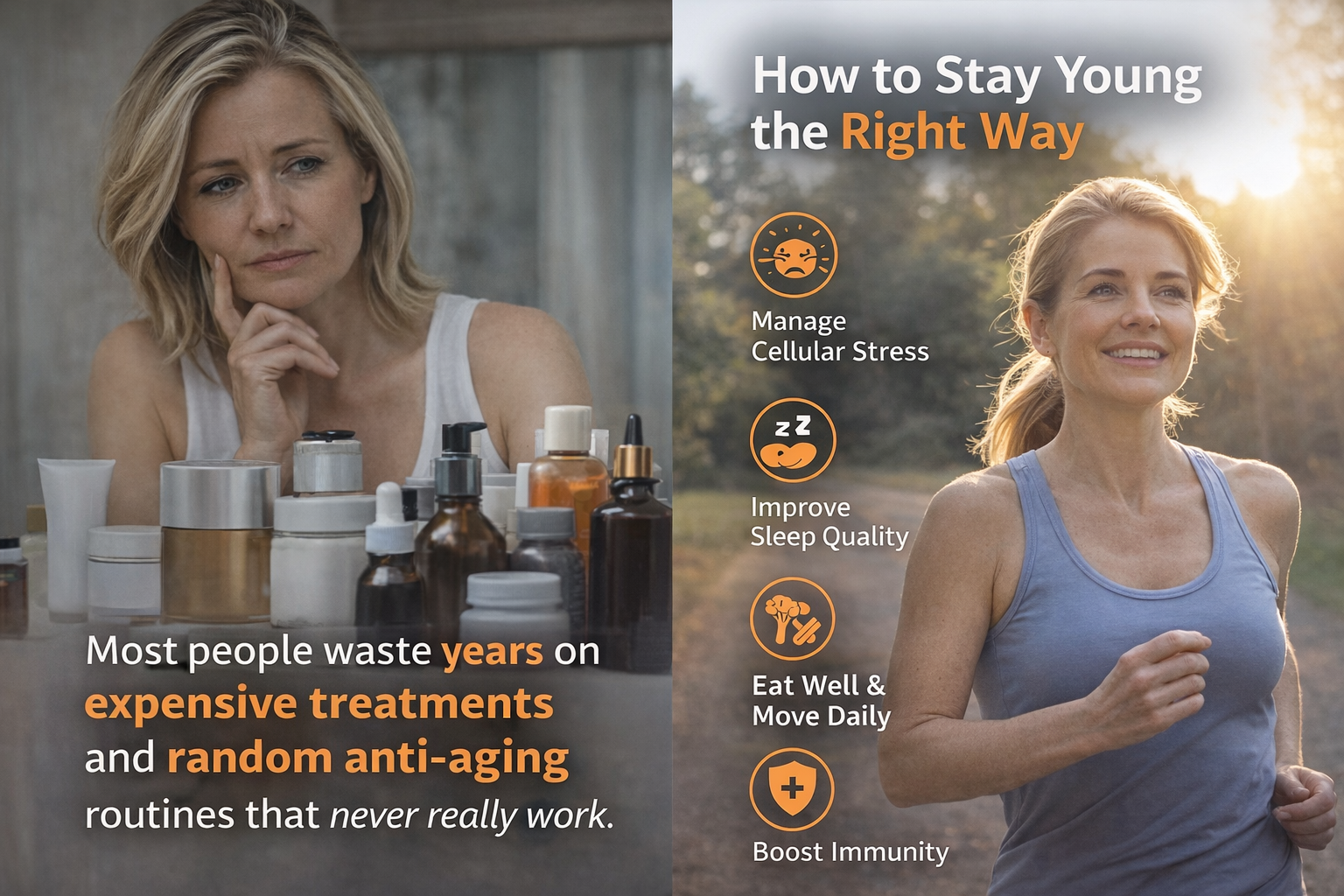
Most people think learning how to stay young is about genetics, expensive treatments, or extreme anti-aging routines. That is why so many people waste years trying random supplements, trendy diets, and complicated plans that never really change how they look or feel.
The truth is simpler and much more useful: staying young is not about doing everything. It is about doing the right things, consistently, for long enough that your body has a chance to respond.
Modern aging research shows that how you age is shaped by biology, environment, and daily behavior. Scientists now study biological aging through processes such as chronic inflammation, cellular stress, impaired repair, and changes in sleep, movement, and metabolism. That means your habits matter more than most people realize.
If you want a real answer to how to stay young, this guide gives you the strongest evidence-based foundation: what matters, what does not, what to start with first, and how to build a lifestyle that keeps you looking younger, feeling stronger, and aging slower over time.
Why People Age Faster Than They Should
Aging happens to everyone, but the speed and quality of aging are not identical from person to person. Research from the National Institutes of Health and leading aging journals shows that the body changes with time, but those changes are influenced by lifestyle, sleep, physical activity, diet quality, stress, and environmental exposure.
Chronological age is not the same as biological age
Your chronological age is the number of years you have been alive. Your biological age reflects how your body is functioning right now. That is why two people of the same age can look, move, think, and recover very differently.
The biggest accelerators of visible aging
- Too little sleep, especially over long periods
- Low physical activity and loss of muscle mass
- Poor diet quality and excess ultra-processed food
- Too much sun exposure without protection
- Chronic stress and weak recovery
- Smoking and other toxic exposures
- Inconsistency: good intentions with no system
This is the first big shift in understanding how to stay young: you do not need a miracle. You need to stop accelerating the aging process with everyday habits that quietly push the body in the wrong direction.
The Science of Staying Young
The strongest science on aging does not promise immortality. What it does show is that many age-related changes can be influenced by modifiable behaviors. NIH-supported research has highlighted biological aging as a measurable process, and the National Institute on Aging has repeatedly emphasized that daily choices affect healthy aging outcomes.
What “anti-aging” should really mean
Forget the fantasy version. In real life, anti-aging means supporting the systems that keep you resilient: metabolism, sleep, hormone balance, mobility, cognition, skin integrity, circulation, and recovery.
The practical goal
The real goal is not looking 18 forever. The real goal is to be biologically younger than you would have been if you ignored your health. That means more energy, better skin, stronger hair, better body composition, sharper thinking, and slower decline.
The most useful mindset shift
Do not ask, “What is the one secret?” Ask, “What are the few highest-return habits I can repeat every day?” That question leads to results.
How to Stay Young: The 11 Highest-Return Habits
1. Protect your sleep like it is medicine
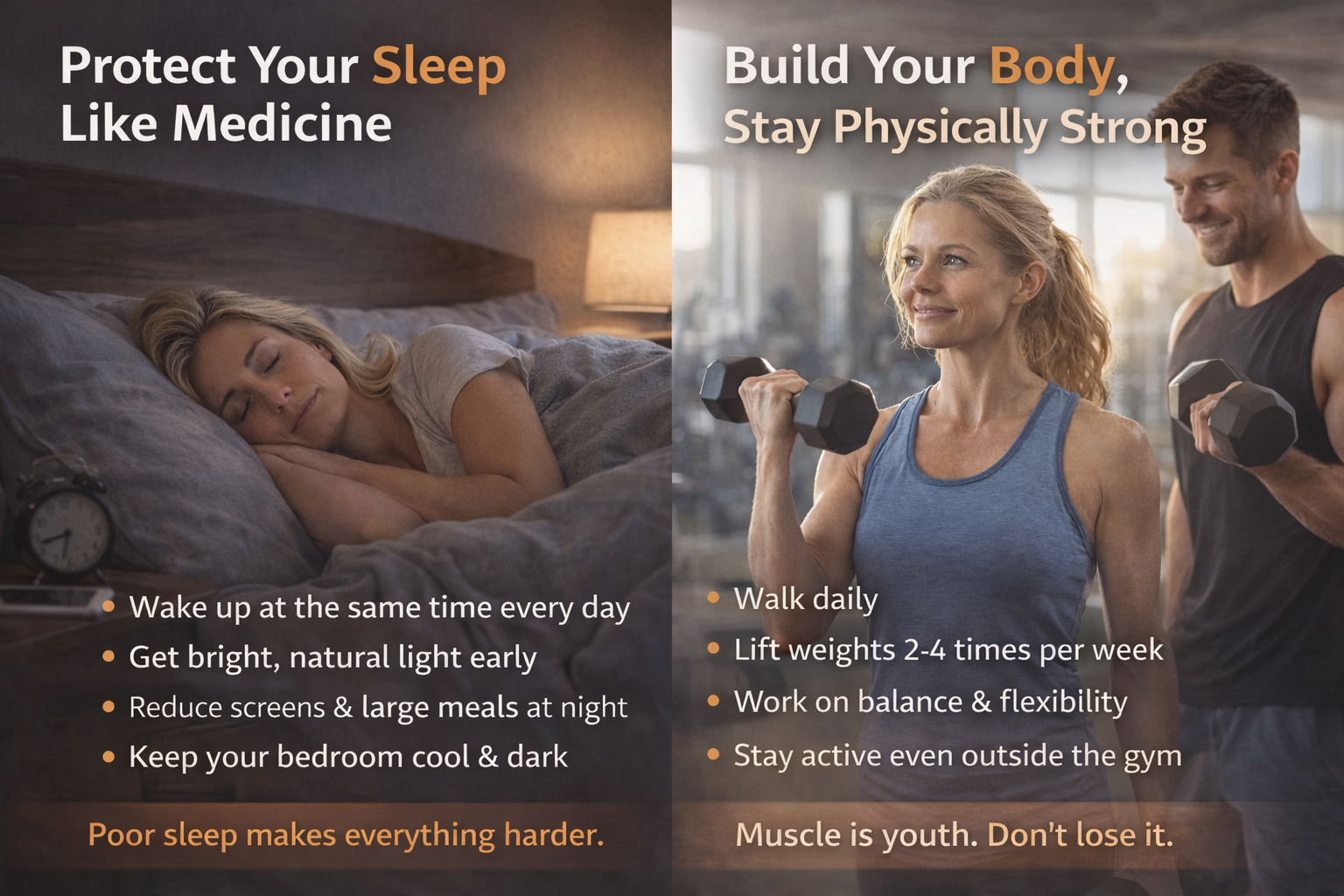
Sleep is one of the most overlooked answers to how to stay young. The National Institute on Aging and NHLBI both state that adults generally need around 7 to 9 hours of sleep a night. Sleep supports recovery, mood, immune function, cognition, and physical health. If your sleep is poor, almost everything else gets harder.
What to do
- Keep your sleep and wake times consistent
- Get morning light exposure soon after waking
- Reduce bright screens and heavy meals close to bedtime
- Keep your bedroom cool, dark, and quiet
2. Build your body, not just your weight loss plan
Many people focus only on losing weight, but staying young depends heavily on preserving strength, muscle, and movement capacity. Regular physical activity is strongly recommended by the CDC for healthy aging, and older adults are advised to aim for at least 150 minutes of moderate-intensity activity per week plus strength and balance work.
What to do
- Walk daily
- Lift weights or use resistance training 2 to 4 times per week
- Add balance and mobility work
- Stay physically active even outside workouts
Muscle is youth. The more you lose, the faster many people feel old.
3. Eat for recovery, not entertainment alone
If you want to know how to stay young naturally, food is non-negotiable. The National Institute on Aging describes healthy eating as a cornerstone of healthy aging. That does not mean perfection. It means the majority of what you eat should help the body repair, regulate, and perform.
What to emphasize
- Protein from quality sources
- Vegetables and fruit daily
- Healthy fats such as olive oil, nuts, seeds, eggs, and fatty fish
- Fiber-rich foods that support metabolic and digestive health
- Mostly whole, minimally processed meals
What to limit
- Ultra-processed foods as a daily base
- Excess alcohol
- Habitual overeating
- Heavy sugar intake that pushes energy and appetite out of control
You do not need to eat like a monk. But if your daily baseline is poor, your body pays for it in your face, your waistline, your energy, and your recovery.
4. Take sun protection seriously
If your goal is to look younger, skin protection matters. The National Cancer Institute notes that ultraviolet radiation causes early aging of the skin. Their guidance recommends applying sunscreen to uncovered skin before going outside and reapplying regularly, along with other protective behaviors.
What to do
- Use sunscreen on exposed skin
- Seek shade when UV exposure is high
- Wear protective clothing, hats, or sunglasses when needed
- Avoid treating sun damage like it is harmless
You can eat well and train hard, but if you ignore your skin for years, it will show.
5. Make stress recovery part of your routine
Stress itself is part of life. The real problem is chronic stress with no recovery. Reviews of the aging literature link long-term stress with pathways involved in biological aging, including inflammation, cellular stress, and disrupted repair. In practical terms, stress shows up in poor sleep, worse skin, low patience, unstable appetite, and lower energy.
What to do
- Take walks without your phone
- Use breathing, prayer, meditation, or quiet reflection
- Do not overfill every hour of the day
- Train hard, but recover hard too
6. Stop treating supplements like the main event
Supplements can help, but they are not the foundation of how to stay young. The National Institute on Aging warns that dietary supplements are not reviewed by the FDA for safety or effectiveness before sale in the same way medicines are, and recommends discussing needs with a clinician or dietitian.
A smarter rule
Use targeted supplements when they fit a real need. Do not use pills to cover up a weak lifestyle. If food, sleep, stress, and movement are a mess, supplements will not save you.
7. Keep your hormones healthy through lifestyle first
Hormonal health affects body composition, skin, libido, recovery, mood, and energy. While medical care matters when there is a real imbalance, many people get major improvements from basic foundations first: sleeping enough, resistance training, reducing excess body fat, eating enough protein, managing stress, and limiting heavy alcohol intake.
8. Protect your brain while you protect your appearance
Staying young is not just a face issue. The National Institute on Aging notes that physical health, blood pressure control, healthy eating, activity, and mental engagement all support cognitive health as we age. Looking younger means less if your attention, mood, and mental sharpness are falling apart.
What to do
- Read, learn, and challenge your brain
- Sleep enough
- Train your body
- Stay socially connected
9. Protect your skin barrier every day
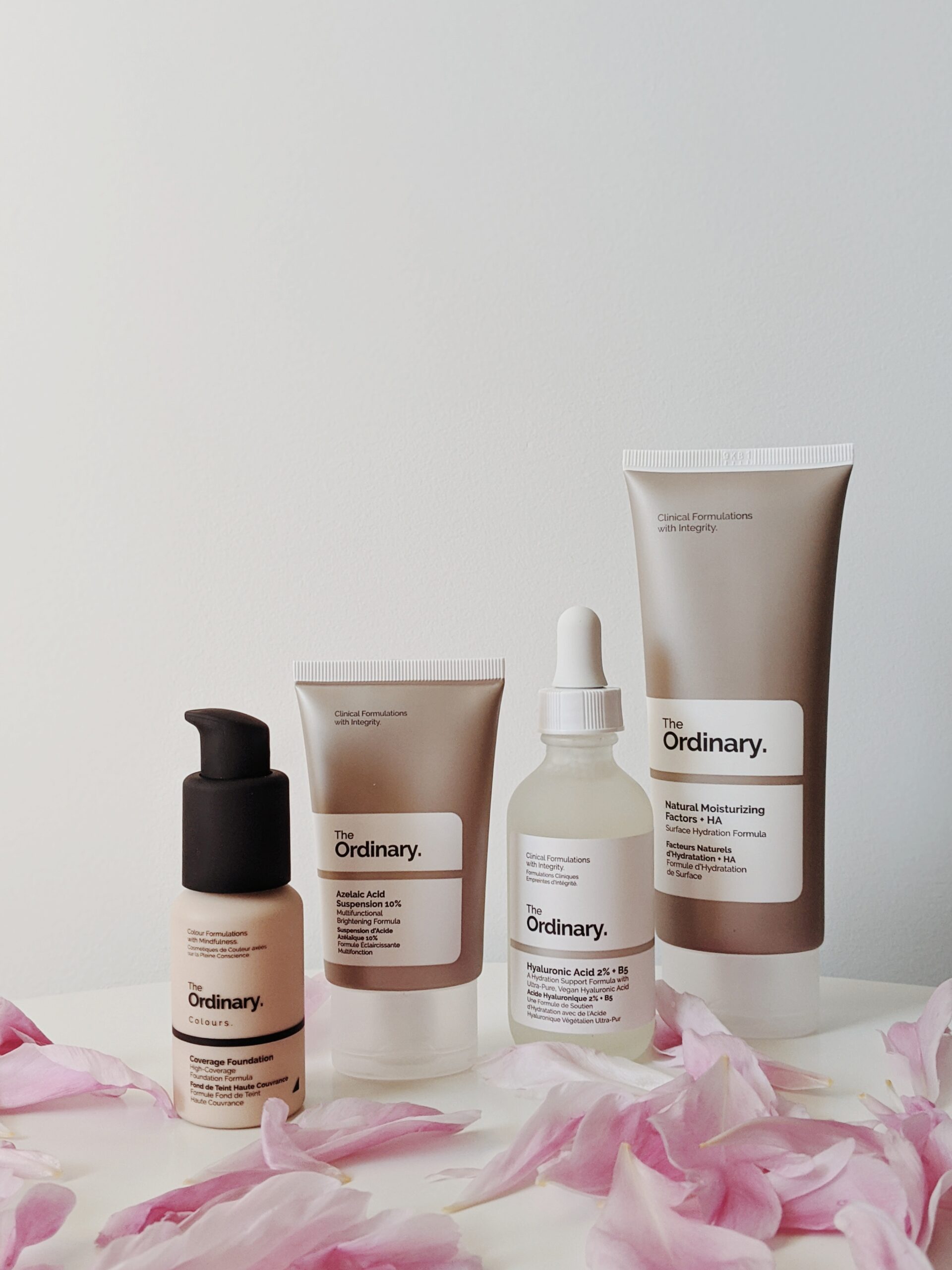
Young-looking skin is not just about avoiding wrinkles. It is about texture, hydration, tone, elasticity, and inflammation control. A simple, sustainable skin routine usually beats an expensive drawer full of products you do not use consistently.
Simple routine
- Gentle cleansing
- Daily moisturizer if your skin needs it
- Sun protection
- Stop irritating your skin with too many experiments
10. Remove the biggest self-inflicted accelerators
Some habits age people faster because they attack multiple systems at once. Smoking is an obvious example. So is chronic sleep debt. So is a sedentary life. So is a pattern of “good for three days, reckless for four.”
| Habit | Likely effect over time |
|---|---|
| Consistent sleep | Better recovery, mood, cognition, and appearance |
| Regular movement | Better muscle retention, circulation, and metabolic health |
| Whole-food baseline | Better energy, appetite control, and long-term resilience |
| Heavy stress with poor recovery | Higher fatigue, worse sleep, and faster visible wear |
| Unprotected UV exposure | Earlier skin aging and cumulative damage |
11. Build a system you can actually live with
This is where most people fail. They collect tips. They do not build a system. A real system means your sleep supports your training, your training supports your metabolism, your food supports recovery, your stress plan protects your sleep, and your routine is simple enough to repeat.
The best answer to how to stay young is not the most extreme routine. It is the routine you can still follow six months from now.
What Most People Get Wrong About Staying Young
They look for one magic fix
There is no single cream, food, exercise, or supplement that does everything. Youth is a stack. Sleep, movement, food, stress, skin protection, and consistency work together.
They focus only on the face
Your face matters, but your body, posture, muscle, energy, and mood affect how old you seem too.
They confuse intensity with effectiveness
Complicated does not mean powerful. Sustainable beats dramatic.
A Smarter Weekly Plan for How to Stay Young
Your non-negotiables
- 7 to 9 hours of sleep most nights
- Daily walking or general movement
- Strength training multiple times per week
- Protein and whole foods at most meals
- Sun protection when exposed
- A recovery practice that keeps stress under control
Your optional upgrades
- Structured mobility work
- Tracking body composition instead of only body weight
- Testing for specific nutrient gaps with a clinician
- A simple skin routine you actually use
Frequently Asked Questions
Can you really learn how to stay young naturally?
Yes. You cannot freeze time, but you can change how you age. The evidence is strongest for movement, sleep, diet quality, sun protection, stress control, and long-term consistency.
What is the fastest way to look younger?
The fastest visible wins usually come from better sleep, improved hydration, a cleaner diet baseline, reduced alcohol, and more movement. Long-term wins come from building muscle, protecting skin, and staying consistent.
Do you need expensive treatments?
No. Some people choose them, but most people leave huge results on the table by ignoring the basics that cost far less and pay off for years.
Are supplements necessary?
Only when they solve a real gap or support a specific need. They are helpers, not the main structure.
How do you stay young after 40?
After 40, the basics become even more important: sleep, strength training, body-fat control, protein intake, stress reduction, mobility, and regular health screening.
What matters more: genetics or habits?
Genetics matter, but habits still shape how those genetics play out in real life. That is why people of the same age often age very differently.
Conclusion: If You Really Want to Know How to Stay Young
How to stay young is not a mystery anymore. The science is clear enough to act on right now. Sleep better. Move more. Build muscle. Eat like recovery matters. Protect your skin. Manage stress. Stop chasing random fixes. Build a system.
That is the difference between people who age well and people who feel like they are falling apart too early.
Most people already know pieces of this. They have heard the advice. They have tried a few things. They get some results, then lose momentum, then go back to guessing.
That is exactly why I put everything into one complete course.
Not another list of tips. Not another trend. A full system that shows you what actually matters, how to combine it, what to avoid, what to prioritize first, and how to make it work in real life without turning your life into a laboratory.
If you want more than information—if you want the structure behind real results—this is where to go deeper.
Do not miss this. What you learn inside can change how you look, how you feel, and how you age.
Recommended External Resources
- National Institute on Aging: Sleep and Older Adults
- CDC: Physical Activity Guidelines for Older Adults
- National Institute on Aging: Healthy Eating, Nutrition, and Diet
- National Cancer Institute: Sunlight and Skin Damage
- National Institute on Aging: Vitamins and Supplements
- NIH Research Matters: Can We Slow Aging?